Hotel guest experience no longer starts at the front desk. It starts on the website.
Before a guest ever walks through the lobby, they browse rooms, compare options, check policies, and quietly decide whether they trust the hotel enough to book. This moment is where hospitality website conversion is won or lost, yet most hotel websites leave guests alone right when reassurance matters most.
Table of Contents
Guest experience begins before check in
Hotels invest heavily in interior design, service training, and on site guest care. Online, the same standards rarely apply.
A hotel website is often treated as a brochure or a booking engine, not as part of the guest experience itself. Yet for many guests, this is their first interaction with the brand. Questions about rooms, amenities, arrival times, cancellations, or special requests appear before booking, not after.
At this stage, intent is already high. Confidence is not.
This gap between intent and confidence is one of the biggest drivers of hotel booking abandonment and a direct threat to hotel customer experience online.
Why chatbots and forms break hotel customer experience
When guests hesitate, most hotel websites offer two options. A form or a chatbot.
Forms remove momentum. Guests must stop, write, submit, and wait. The emotional energy of booking disappears while they wait for an email response that often arrives hours or days later.
Chatbots respond faster, but speed alone does not build trust. Automated answers feel transactional at a moment that is emotional. When money, travel plans, and expectations are involved, guests want confirmation from a real person, not scripted replies.
This is why automation often increases friction instead of reducing it during booking hesitation.
Hospitality is personal. Automation is not.
Live video as a hospitality layer, not a sales tool
The missing element on most hotel websites is presence.
Live video conversations bring the feeling of a front desk or concierge into the digital space. Guests see a real person, hear a real voice, and know someone is responsible for their experience. This changes behavior instantly.
Live video is not about selling. It is about reassurance. It replaces uncertainty with clarity and replaces hesitation with confidence. One short conversation can answer multiple questions that would otherwise stretch into long email threads.
This is where guest experience becomes continuous, not split between online and offline.
Where Live Reception fits into the hotel guest journey
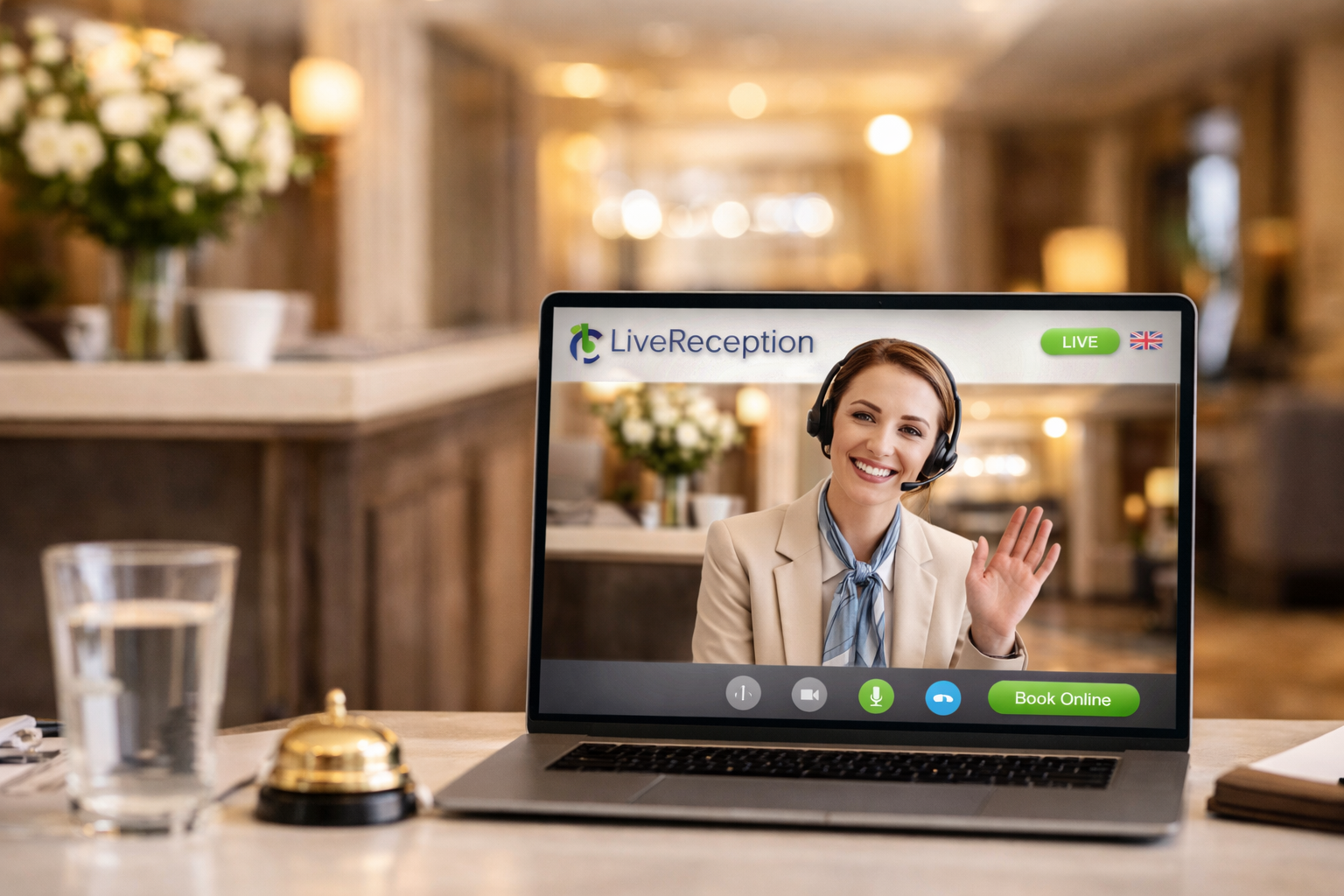
Live Reception adds a human video layer directly onto the hotel website at high intent moments. It appears when guests are browsing rooms, reviewing policies, or pausing before booking.
Instead of pushing guests into forms or automated chat flows, Live Reception connects them with hospitality trained specialists through live video conversations. These specialists act as a digital concierge, guiding guests in real time without interrupting the booking process.
AI supports the interaction quietly in the background by providing context and routing. The guest experience remains human first.
This approach turns the website into an active part of hotel guest experience rather than a static step before arrival.
What changes when hotels add a human layer online
When hotels introduce live video conversations into their website experience, several things shift immediately.
Guests feel guided instead of pressured. Booking hesitation decreases. Repetitive pre booking questions drop. Trust increases before arrival.
From a business perspective, hospitality website conversion improves because high intent traffic no longer leaks at the most valuable moment. From a brand perspective, hotels deliver the same level of care online that guests expect on site.
This is not a redesign. It is not a new booking engine. It is a missing layer that completes the experience.
Guest experience should not start at the front desk
Hotels are experts at welcoming guests in person.
Live Reception allows them to do the same online.
When a real human appears at the exact moment a guest hesitates, the website stops being a barrier and starts becoming part of the service. Guest experience flows naturally from the first click to check in.
That is where modern hospitality begins.
Why timing matters more than technology in hospitality conversion
Many hotels focus on choosing the right tools instead of choosing the right moment.
Booking hesitation is not a constant state. It appears briefly, often for seconds, when a guest pauses before committing. At that moment, technology alone cannot recover confidence. Timing and presence matter more.
Hospitality website conversion improves when support appears exactly when hesitation happens, not before and not after. Live video conversations succeed because they are immediate and contextual. They do not interrupt the journey. They join it.
This is the difference between offering help and being present.
The psychological difference between reading and being acknowledged
Guests reading FAQs, policies, or automated responses are processing information alone. Even if the content is accurate, something important is missing.
Acknowledgment.
Seeing a real person confirms that the hotel recognizes the guest as an individual, not a transaction. A short live video interaction can instantly reduce anxiety, clarify uncertainty, and reinforce trust.
This psychological shift plays a direct role in hotel guest experience and explains why human interaction consistently outperforms automated systems during high value decisions.
Digital concierge as an extension of hospitality standards
Concierge service has always been about anticipation, reassurance, and guidance. Bringing this mindset online does not mean copying the front desk. It means adapting hospitality principles to digital behavior.
A digital concierge does not wait for long explanations. They listen, respond, and guide efficiently. Live video conversations allow hotels to deliver this level of service without adding complexity to the website or the booking engine.
Guests experience continuity. The brand experience feels intentional from the first click.
Reducing friction without changing the booking engine
One of the advantages of adding a human layer through live video is that it does not require structural website changes.
Hotels do not need to redesign pages, rebuild booking flows, or replace existing systems. Live Reception works alongside what already exists, stepping in only when guests hesitate.
This makes it a low disruption way to improve hospitality website conversion while preserving established operations and workflows.
Why this approach scales across hotel portfolios
For hotel groups and multi property brands, consistency is one of the hardest challenges.
Live video conversations allow centralized standards to be delivered across multiple websites while maintaining a personal feel. Guests receive the same quality of reassurance regardless of property, region, or time zone.
This supports both brand consistency and local guest expectations, strengthening overall hotel customer experience without sacrificing flexibility.
A shift from reactive support to proactive experience
Traditional online support reacts after a guest reaches out. By that point, momentum is often lost.
Live video conversations shift this dynamic. Support becomes proactive, visible, and available before frustration or doubt escalates. Guests feel supported without having to ask for help explicitly.
This proactive presence aligns closely with hospitality values and directly supports higher conversion rates during booking.
Final perspective
Hospitality has always been about making guests feel welcome, understood, and safe.
Live video conversations allow hotels to carry these values into the digital space, where decisions now begin. By adding Live Reception as a human layer on the website, hotels transform booking from a solitary task into a guided experience.
That change influences trust, confidence, and conversion in ways no automated system can replicate.