Many ecommerce teams treat cart abandonment like a checkout defect, often seeking cart abandonment solutions ecommerce can provide. They trim form fields, test button colors, simplify payment steps, and send recovery emails. Yet abandonment stays stubbornly high.
That is not because those efforts are pointless. It is because they often target the wrong moment.
When a shopper reaches the cart, they are no longer casually browsing. They have already made a series of small commitments. They chose a product, evaluated relevance, and moved toward purchase. At that stage, abandonment is rarely just a pricing problem or a layout problem. More often, it is a decision breakdown at the exact point where intent should turn into action.
That shift in perspective changes everything. If the real issue is unresolved doubt, then many familiar fixes are only partial answers. A discount may soften resistance, but it does not clarify fit. A recovery email may remind someone later, but it cannot answer a question while the buyer is hesitating. A cleaner checkout process may remove friction, but it does not create confidence.
The gap is not always technical. Quite often, it is human.
Table of Contents
Cart Abandonment Solutions Ecommerce: Rethinking the Problem
Shopping cart abandonment is usually framed as a failure after interest, highlighting the need for effective cart abandonment solutions ecommerce strategies to address this challenge. That framing misses what the cart actually represents.
The cart is not the top of the funnel. It is not even mid-funnel. It is the final stage of intent before commitment. Shoppers who get there have already filtered choices and selected a path. What stops them now is often small in appearance but heavy in impact: uncertainty about delivery, uncertainty about returns, uncertainty about quality, uncertainty about whether the product will really solve the problem they came to solve.
A buyer can want the product and still leave.
That sounds contradictory until you look at how people make purchase decisions online. They do not abandon only because they changed their mind. Many abandon because they cannot finish the decision with confidence. In a store, a sales associate can answer the last question, reassure the buyer, and remove hesitation in seconds. In e-commerce, that moment is often left unsupported.
This is why abandonment rates remain high even on well-designed sites, emphasizing the need for effective cart abandonment solutions ecommerce strategies to address these issues. The site may function perfectly, while the decision still fails.
Cart Abandonment Solutions Ecommerce: Beyond Pricing and UX
Analytics can show where shoppers drop off. They rarely show why they stopped.
A session recording may reveal that a user paused on the cart page. A funnel report may show a drop between shipping and payment. Heatmaps may show attention on a returns link or shipping policy. What those tools cannot fully capture is the buyer’s internal question: “What if this does not fit?” “Can this arrive by Friday?” “Is this worth the price?” “What happens if I need to send it back?” “Which option is right for me?”
Those questions are not minor details. They are the final gate between interest and revenue.
A high-intent shopper often leaves with behavior that looks indecisive but is actually highly rational. They are protecting themselves from making the wrong purchase. That is especially true when the product is expensive, personal, time-sensitive, or hard to evaluate from images alone.
Some of the strongest signs of final-stage hesitation look like this:
- repeated visits to the same product page
- extended time on shipping and returns pages
- switching between product variants
- moving between comparison pages and the cart
- pausing for long periods before checkout completion
These are not signs of weak intent. They are signs that intent needs support.
The real reasons behind ecommerce cart abandonment
If traditional tactics are not moving the needle, the first step is to stop assuming every abandoned cart is caused by price or poor design and to consider implementing cart abandonment solutions ecommerce to address these issues. Many carts are abandoned because the buyer has one unresolved concern and no easy way to resolve it.
Unanswered product questions stop purchase momentum
Product pages can be strong and still leave gaps. A shopper may need a detail that is missing, unclear, or too generic to trust.
A customer buying skincare may want to know whether a formula works for sensitive skin. A buyer considering office furniture may want to confirm assembly time or material durability. Someone buying electronics may want to know whether a device works with what they already own. If the answer is not immediately available, the safest move is to wait.
Waiting often becomes leaving.
Delivery, returns, and fit create hesitation even when the product is right
A shopper can be fully sold on the item and still hesitate because the operational side feels uncertain.
This is common in fashion, furniture, gifts, and high-consideration products. If delivery dates feel vague, return terms feel restrictive, or size guidance feels generic, the buyer starts calculating risk rather than value. That shift can kill conversion even when demand is strong.
Trust is often the missing ingredient at checkout
Trust issues do not always show up as obvious fear. Sometimes they appear as silence.
The site may look professional, the product may be attractive, and the price may be acceptable. Yet the shopper still wants reassurance that there are real people behind the brand, that support exists if something goes wrong, and that the purchase will not become a frustrating experience later.
Trust becomes even more important when the product is expensive, customized, health-related, or intended for a special event.
High-ticket purchases create a pause that automation rarely resolves
The higher the price, the more buyers want confirmation.
This is not just about affordability. It is about judgment. People want to feel certain they are making the right choice. They want validation, context, and sometimes a short conversation that confirms what the site alone cannot.
That pause before a high-ticket purchase is one of the most valuable moments in ecommerce because the buyer is close, engaged, and emotionally invested. It is also one of the easiest moments to lose if no real help appears.
Complex or emotional questions do not fit neatly into scripted systems
Some questions are simple and transactional. Others are layered.
A customer may ask whether a mattress suits a side sleeper with back pain. Another may ask whether a dress works for a wedding with a very specific fit concern. Another may want help comparing two premium bundles and figuring out which one makes more financial sense over time.
These are not questions that buyers always want to submit through a form and wait on; effective cart abandonment solutions ecommerce can provide the clarity they need now, while they are still willing to buy.
Why traditional cart abandonment solutions often stall
Most ecommerce teams are not ignoring shopping cart abandonment solutions ecommerce. They are already doing something about it. The issue is that the standard toolkit is built around recovering users after they leave or smoothing the interface around them. That helps, but it does not directly address hesitation in the moment it happens.
Common tactics usually fail for clear reasons, highlighting the need for effective cart abandonment solutions in ecommerce:
- Discounts: lower resistance only when price is the actual barrier
- Cart recovery emails: arrive after attention has shifted elsewhere
- UX improvements: reduce friction but do not answer personal doubts
- Chatbots: handle simple tasks, then break down when questions become nuanced or emotional
Discounting is the clearest example. It often looks effective because some buyers do return and convert. Yet many of those conversions come at the cost of margin, and many doubts remain untouched. If a customer is worried about delivery reliability, a 10 percent discount does not solve that. If they are unsure about fit, the lower price simply makes the risk slightly cheaper.
Recovery emails have the same limitation from a different angle. They are reactive. By the time the email arrives, the buyer may be distracted, comparing alternatives, or emotionally detached from the purchase. The moment of intent has cooled.
UX improvements matter, and any serious ecommerce business should keep refining the path to purchase. Still, smoother flow is not the same as decision support. A shorter checkout cannot answer whether the sofa fabric is kid-friendly. A clearer button cannot reassure someone buying a ring for an anniversary with a hard deadline.
Chatbots help with FAQs, order tracking, and basic routing. They struggle when the buyer’s hesitation is context-heavy or emotionally loaded. At that point, scripted logic starts to feel like avoidance.
The missing layer in ecommerce checkout is real-time human interaction
If abandonment is often a decision breakdown, then the obvious question is this: what actually helps someone complete a decision while they are still on the site?
A real person.
Not hours later. Not after an email reminder. Not buried behind a ticket form. Right there, at the moment the buyer hesitates.
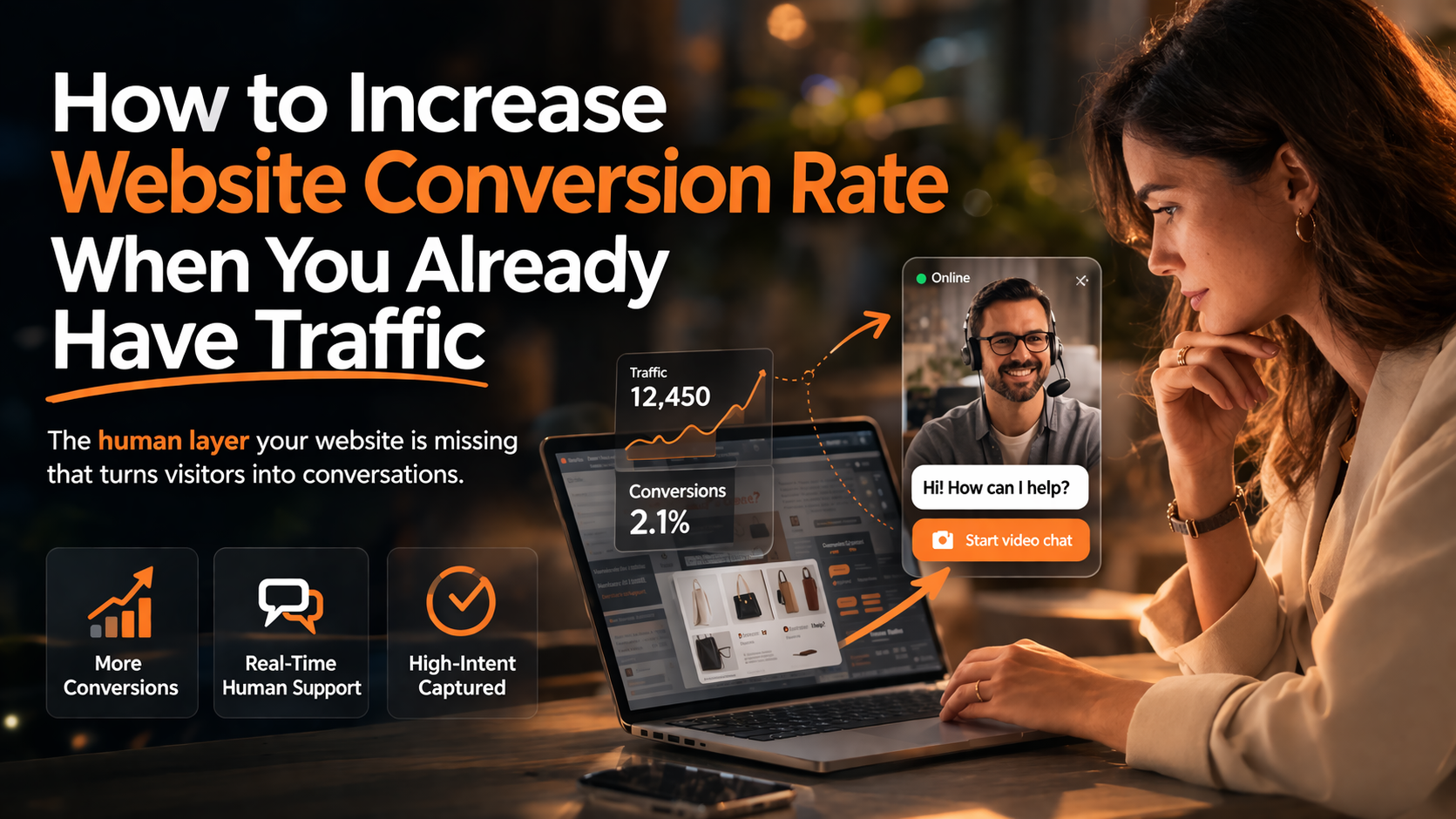
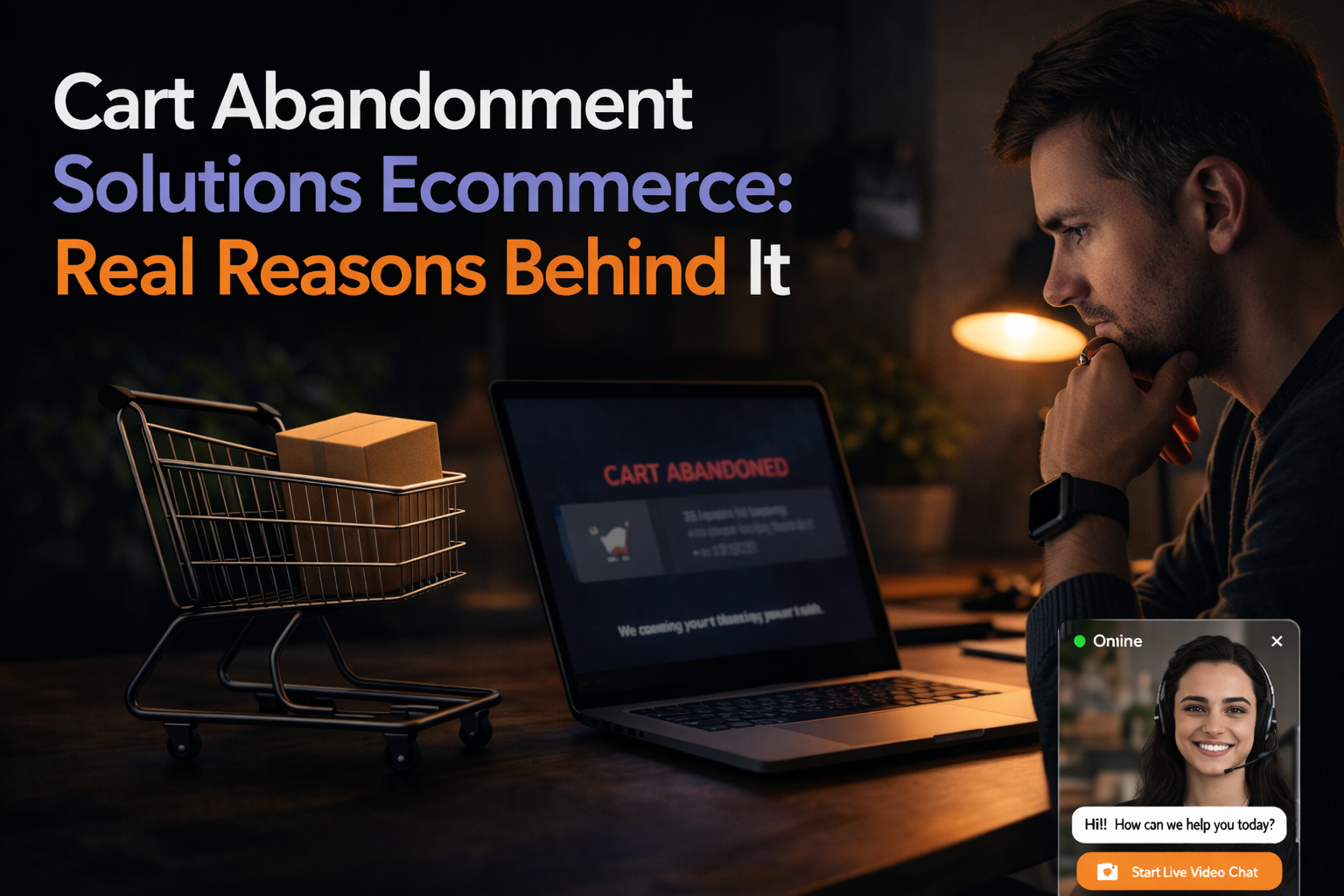
This is where Live Reception changes the conversation. It adds a human sales layer inside the digital buying process. Instead of hoping the shopper figures it out alone, the business creates a way for buyers to ask, confirm, and move forward in real time.
That sounds simple because it is. It also addresses the exact part of conversion that many ecommerce stacks leave untouched.
A live interaction can do what automated tactics often cannot:
| Cart-stage hesitation | What the shopper is really asking | Why common fixes miss it | What Live Reception changes |
|---|---|---|---|
| High-ticket hesitation | “Am I making the right choice?” | Discounts cut price but not uncertainty | A real person gives context, confirms fit, and builds confidence |
| Delivery concern | “Will this arrive when I need it?” | Static shipping pages feel generic | A live answer creates immediate clarity |
| Return anxiety | “What happens if this does not work out?” | Policy pages feel legal, not reassuring | Human reassurance reduces perceived risk |
| Size or fit doubt | “Will this actually work for me?” | Charts and FAQs can be too broad | A conversation can guide the buyer to the best option |
| Product comparison | “Which version should I choose?” | Automated flows rarely handle nuance well | A live interaction helps the buyer decide without leaving |
The value is not only customer service. It is conversion.
When buyers receive immediate, credible answers while intent is still active, more of them complete the purchase. That turns pre-purchase support from a cost center into a revenue driver.
Live Reception works because it meets hesitation at the exact moment it appears
Timing matters as much as content.
A buyer who is still on the site is mentally engaged. They are still weighing the purchase. They have not yet opened a competitor’s tab, gone back to social media, or decided to “think about it later.” This is the most valuable moment to intervene because the purchase is still alive.
Live Reception works well in this window because it introduces three things at once: speed, reassurance, and accountability.
Speed matters because doubt grows fast. If a shopper needs to wait until tomorrow for an answer, the sale may already be gone. Reassurance matters because buyers often want more than information. They want confidence. Accountability matters because a real human presence signals that the business is accessible and invested in helping them succeed.
That changes how the cart feels. Instead of becoming a cold checkpoint where buyers self-serve every final concern, it becomes a supported decision point.
Ecommerce scenarios where live human conversation recovers the sale
The practical value becomes clearer when you picture real buying situations.
A shopper has added a $1,200 ergonomic chair to the cart during the checkout process. They have read reviews, looked at dimensions, and spent fifteen minutes on the product page. At checkout, they pause. Their concern is not price alone. They want to know whether the lumbar support suits someone who sits for ten hours a day and whether the chair will be difficult to assemble. A recovery email tomorrow will not help much. A live conversation right now can.
Take an apparel shopper buying multiple items for an event next week. The cart is full, but the buyer is unsure about fit and delivery timing. They are comparing sizes, opening the returns page, and hovering around shipping details. A chatbot may send them to a generic size chart. A live human can say which item runs small, confirm delivery timing, and reduce the risk they are mentally calculating.
Now consider a customer choosing between two premium skincare bundles. They are not simply asking which one costs less. They want to know which one is better for their skin profile and whether certain ingredients can be paired together. This is not a support ticket. It is a closing conversation.
These moments happen every day in e-commerce. Many stores lose them because no human layer or cart abandonment solutions ecommerce strategy exists inside the buying path.
Why more traffic does not fix abandonment without a closing mechanism
Many teams respond to flat conversion numbers by pushing harder on acquisition. More paid traffic, more campaigns, more top-of-funnel activity.
That can grow volume, but it can also magnify waste.
If the cart stage is where decisions are falling apart, then without implementing effective cart abandonment solutions ecommerce will suffer as more potential buyers reach the same unresolved barrier. Spend rises, but the conversion leak remains. This is where lead generation and cart abandonment connect more closely than many teams realize.
Generating demand is valuable. Yet demand without closure is expensive.
A stronger model treats acquisition and conversion support as part of the same system. Lead generation brings qualified traffic in. Live Reception helps close the buyers who have already signaled intent. When both are in place, traffic quality matters more because more of that intent is converted before it disappears.
Sales as a Service changes pre-purchase support from help desk to revenue engine
Many ecommerce brands still separate “sales” from “support” because the site is expected to do the selling on its own. That idea worked better when online catalogs were simpler and customer expectations were lower.
Today, many purchases need guidance. The winning move is not always to add more banners, more urgency messaging, or more automated nudges. Sometimes it is to treat live conversation as a sales function.
This is where a Sales as a Service model becomes useful. The interaction is not just there to answer tickets. It exists to move high-intent buyers across the line. That means the conversation is measured not only by response time or satisfaction but by assisted conversion, recovered carts, average order value, and revenue influenced.
This shift is subtle but powerful. When live interactions are designed as a closing mechanism, they become part of the commercial engine rather than an isolated support layer.
A strong setup usually includes:
- clear triggers for when live help appears
- trained agents who can guide buyers, not just reply
- handoff paths for product, delivery, and returns questions
- reporting tied to conversions, not only contact volume
That is a different posture from standard customer service. It is closer to in-store selling, adapted for ecommerce behavior.
Customer support starts before the transaction, not after it
Many brands treat customer support as something that begins once the order is placed. That leaves a major revenue opportunity untouched.
Pre-purchase support is often where the sale is won or lost. When a shopper asks about fit, product details, or delivery timing, they are not creating friction. They are signaling readiness. They are asking for what they need to feel safe saying yes.
Seen this way, support is not just a post-purchase function. It begins earlier, while value is still being decided.
This perspective also improves efficiency. Questions asked before purchase can prevent returns, reduce cancellations, and set better expectations. A customer who gets real guidance up front is more likely to buy the right product, choose the right variant, and feel confident about delivery and policy terms.
That means the same human layer that recovers carts can also improve downstream performance.
What ecommerce teams should measure when adding a human layer
If Live Reception is treated seriously, it should be measured seriously too.
The goal is not to add another widget and hope for better numbers; instead, it’s about implementing cart abandonment solutions ecommerce teams can leverage for improved conversion. The goal is to identify where hesitation appears, insert real-time support at those points, and tie interactions to revenue outcomes.
Good measurement focuses on both conversion and quality signals. Teams often track:
- assisted conversion rate
- response time during cart and checkout
- revenue recovered from live conversations
- common pre-purchase objections by product category
- return rate changes after guided purchases
Those metrics tell a richer story than abandonment rate alone. They show whether buyers are getting clarity, whether support is appearing fast enough, and whether pre-purchase conversations are improving not just immediate conversion but order quality.
They also help reveal product and policy weaknesses. If live agents keep answering the same question about shipping, the shipping page needs work. If size concerns dominate a category, the fit guidance may be too vague. Human conversations do not replace site improvements. They expose where improvements matter most.
The shift that changes cart abandonment performance
Reducing cart abandonment is often framed as a chase, yet leveraging cart abandonment solutions ecommerce can redefine this approach. A shopper leaves, the system follows up, and the brand tries to win them back.
That model will always have limits because it starts after intent has already weakened.
A stronger model focuses on conversion while the buyer is still present, still engaged, and still deciding. That requires a change in mindset more than a change in design. Cart abandonment is not only a checkout issue; implementing cart abandonment solutions ecommerce can directly address unresolved doubts interrupting a near-finished decision. It is the point where unresolved doubt interrupts a near-finished decision.
Once you see it that way, the missing piece becomes hard to ignore.
Pricing tweaks can help. UX refinements can help. Emails can recover some lost demand. None of them consistently replace the value of a real human interaction at the moment of hesitation. When a buyer needs reassurance, clarity, or a final nudge grounded in real context, the fastest path to conversion is often a conversation.
That is why Live Reception fits so naturally into ecommerce performance strategy. It does not ask teams to abandon their current tactics. It fills the gap those tactics leave behind. It gives high-intent shoppers a way to resolve uncertainty before they leave, not after.
And that is where more of the missed revenue is sitting.