Most companies assume the answer to weak revenue is simple: generate more leads.
That belief feels logical, especially when dashboards emphasize traffic, cost per lead, and campaign volume. Yet many businesses already have enough opportunities to grow. The real problem appears earlier, in the narrow window between first interest and first response. Revenue slips away there, long before a sales representative has a chance to make a pitch.
A prospect fills out a form and hears back the next day. Another calls during lunch and reaches voicemail. A buyer comparing vendors lands on a pricing page, has one question, finds no easy way to ask it, and leaves. None of those moments look dramatic in isolation. Taken together, they create a quiet pattern of loss that weakens pipeline performance, distorts marketing ROI, and lowers close rates before sales even starts.
Table of Contents
The hidden cost of poor lead response time
Lead response time is not just a service metric. It is a revenue metric.
When a prospect reaches out, buying intent is often at its highest point. Interest is active, the problem feels urgent, and alternatives are already being reviewed. If the response is slow, the lead does not sit patiently in a queue. That person keeps searching, keeps comparing, and often moves toward the first company that feels available.
Widely cited sales research has shown a consistent pattern: leads contacted within five minutes are far more likely to turn into real conversations than leads contacted after 30 minutes, one hour, or a full day. The exact multiplier differs by industry, though the direction is clear across studies. Speed increases contact rates. Contact rates increase pipeline quality. Pipeline quality shapes revenue.
Take a common scenario. A facilities manager submits an inquiry to three vendors at 3:10 p.m. Vendor A responds at 3:14 with a short message and an offer to talk now. Vendor B replies at 5:40. Vendor C answers the next morning. Even if all three offer similar pricing and service, Vendor A enters the buying process with momentum, trust, and access to context while intent is still fresh.
| Prospect action | Business response speed | Likely outcome |
|---|---|---|
| Form submission | Within 5 minutes | Higher contact rate, stronger meeting acceptance |
| Form submission | Same business day | Interest weakens, more comparison shopping |
| Phone call | Answered live | Better qualification and next-step commitment |
| Phone call | Voicemail only | Higher drop-off, fewer callbacks |
| Website question | Real-time chat or receptionist | More confidence, better website conversion rate |
| Website question | No live help | Visitor exits and keeps searching |
The hidden cost is not only the lost lead. It is the wasted marketing spend that generated the lead in the first place.
How customer communication affects sales conversion optimization
Sales conversion optimization often gets framed as a funnel design issue. Teams test landing pages, rewrite headlines, and revise CTAs. Those changes matter, but customer communication carries equal weight.
A buyer does not judge a company only by the ad or the website. The buyer judges by the first interaction. Was the reply quick? Was it clear? Did it answer the question? Did it feel human? Those signals shape confidence before pricing, demos, or proposals come into view.
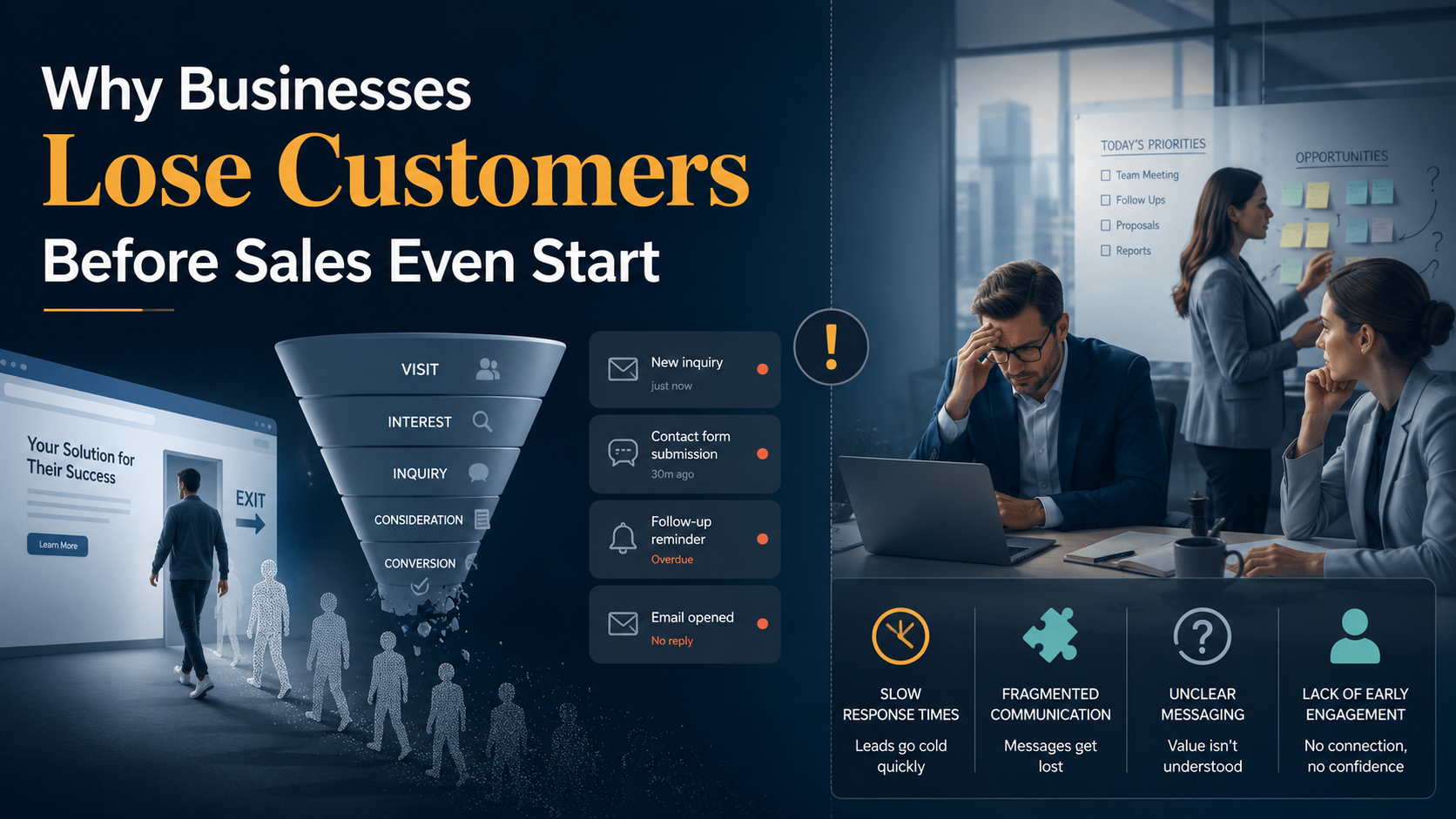
Poor customer communication creates friction at exactly the wrong moment. A generic auto-response can confirm receipt, though it rarely answers uncertainty. A delayed email with no next step creates hesitation. A missed call says, even if unintentionally, “we are not available when you need us.” That message hurts conversion even when the product is strong.
The pattern shows up in a few common ways:
- Slow replies
- Missed calls
- Unclear next steps
- Robotic confirmation emails
- No real-time support
- Inconsistent follow-up
Each point above looks operational. In practice, each one is commercial. That is why sales conversion optimization should not live only inside sales or marketing. Operations, front desk coverage, scheduling, and customer communication all shape the outcome.
Does faster lead response time really change revenue?
Yes, because speed changes behavior.
A quick response lowers the chance that a lead keeps shopping. It also increases the chance of an actual conversation rather than a passive email exchange. A company that responds in minutes can qualify the prospect, answer a blocker, and book the next step while urgency is still present. A company that responds tomorrow must first rebuild attention.
That is why response speed works as a competitive edge even in crowded markets. It does not require a better slogan. It requires better timing.
Where prospects drop out before the buying journey reaches sales
Many teams map the buying journey from discovery to close, yet they often miss the places where sales funnel leakage begins. The loss usually happens before a lead is marked as sales accepted.
A website visitor arrives from a paid campaign, reads a service page, and wants clarification on turnaround time. No chat appears. No phone is answered. The visitor leaves. Marketing counts the click. Sales never sees the person.
Another prospect submits a form after hours. The form enters a shared inbox that no one checks until morning. By 9 a.m., the prospect has already spoken with a competitor that offered immediate help.
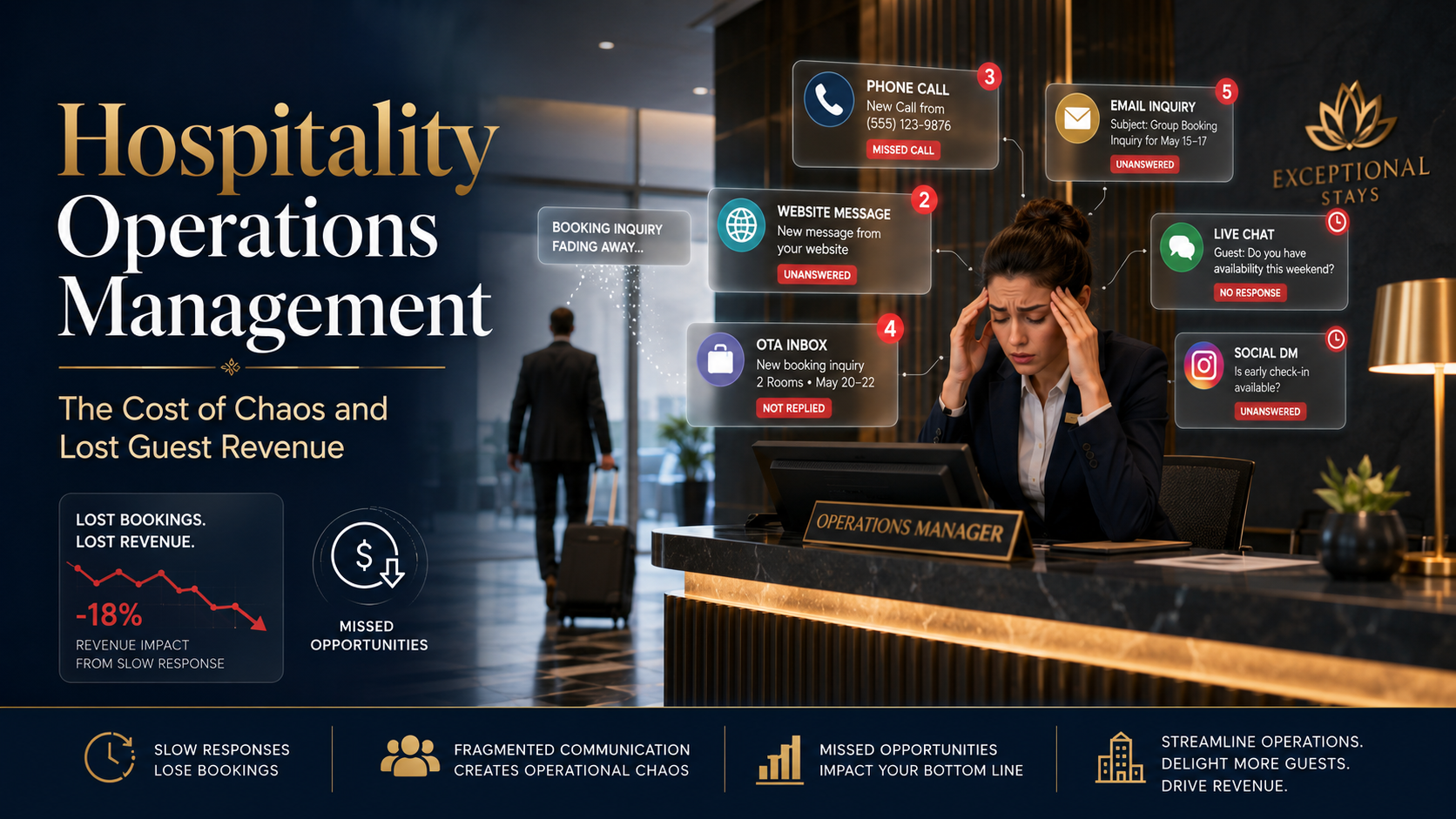
A third person calls twice in one afternoon. The first call goes unanswered because the team is in a meeting. The second reaches voicemail. The caller does not leave a message. That lead vanishes from the record and gets labeled later as “low inbound volume,” when the real issue was accessibility.
These drop-off points often hide between departments:
- Marketing: traffic is generated, though intent is not captured in real time
- Operations: incoming calls or messages are not routed consistently
- Sales: follow-up starts after the highest-intent window has passed
- Leadership: reporting focuses on lead count rather than response quality
When leaders see the funnel this way, a different question appears. The issue may not be “How do we get more leads?” It may be “Why are ready-to-buy prospects slipping through before anyone speaks to them?”
Why website conversion rate improves with human interaction
Website conversion rate is often treated as a design problem. Button color, page layout, and form length all receive attention. Yet a large share of buying hesitation is emotional and practical, not visual.
People hesitate before a purchase because they want reassurance. They may want to check availability, pricing range, implementation timing, service area, contract terms, or fit for a specific use case. If the website cannot answer those questions quickly, the visitor delays action or exits.
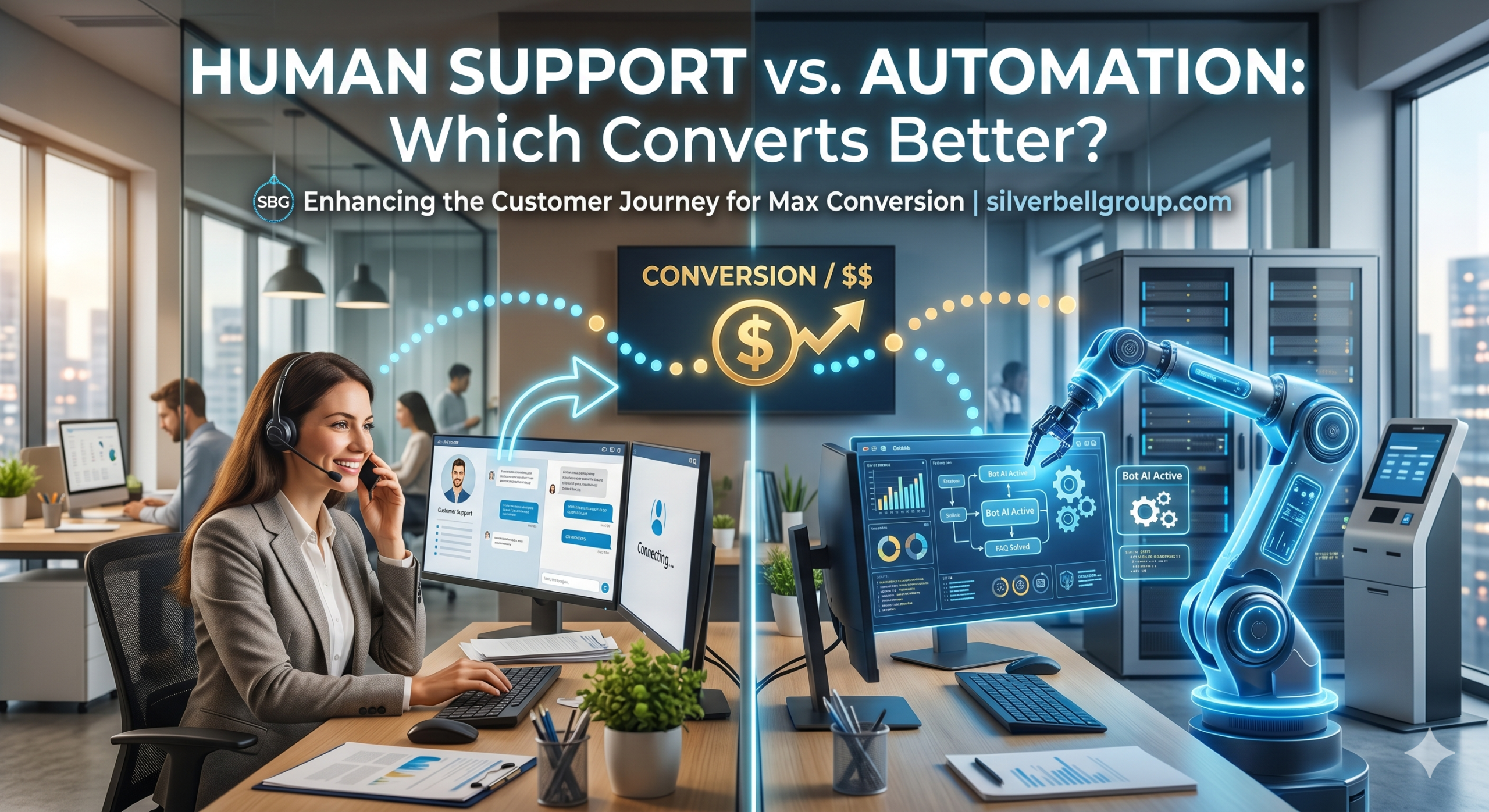
Human interaction changes that pattern. A live receptionist, real-time chat, or immediate callback gives buyers a bridge between curiosity and commitment. It reduces uncertainty without forcing a hard sales conversation too early.
A few moments matter most:
- Pre-purchase question: “Can this work for my situation?”
- Timing concern: “Can someone help me today?”
- Trust check: “Is this a real company that responds?”
- Decision friction: “Is there an easy next step?”
This is one reason website conversion rate often rises when companies add real human coverage. The visitor does not need to guess what happens after clicking “contact us.” The buyer can ask, confirm, and move forward.
Why unanswered website questions cause silent drop-off
Most lost web leads never announce their exit.
They do not send a complaint. They do not ask to unsubscribe. They simply move on. That makes the problem easy to underestimate. Analytics might show healthy traffic and acceptable time on page, while the real issue sits in an unanswered question that blocked conversion.
When businesses add a human touchpoint at the moment of uncertainty, more visitors become conversations, and more conversations become qualified opportunities.
Generating leads versus converting leads in a customer acquisition strategy
A strong customer acquisition strategy must account for both demand creation and demand response. Too many plans focus heavily on the first half.
Marketing brings people in through search, paid media, referrals, events, and outbound campaigns. That work matters. Yet lead generation without lead engagement creates waste. A business can spend aggressively to fill the top of the funnel and still miss targets because the middle never gets activated.
This is the difference between generating leads and converting leads. Generating leads is about attention. Converting leads is about action at the exact moment interest appears.
The distinction becomes obvious in boardroom conversations. One company says, “We need more leads.” Another says, “We need to stop losing the leads we already have.” The second company is often closer to revenue improvement because it is focusing on leakage, not only volume.
A practical customer acquisition strategy should answer three questions:
- How quickly can a prospect reach a real person?
- What happens when interest arrives outside normal business hours?
- Who owns the handoff from first contact to first qualified sales step?
If those answers are vague, growth is being limited by process rather than market demand.
How live reception services capture high-intent opportunities
This is where live reception services become commercially important, not just administratively helpful.
A live receptionist closes the gap between marketing activity and sales action. Instead of letting calls roll to voicemail or website visitors wait for a later response, the business creates an immediate touchpoint. That touchpoint can greet the prospect, answer common questions, collect context, route urgent inquiries, and schedule the next step.
For high-intent leads, that matters a great deal. The goal is not to replace sales. The goal is to make sure sales gets a live opportunity instead of a cold record hours later.
Companies that want stronger first-response coverage often look at live reception services when they notice recurring issues like these:
- Missed calls: prospects reach out, hear voicemail, and never return
- Form delays: inquiries wait in inboxes until someone becomes available
- Website hesitation: visitors have questions but no human path to ask them
- Inconsistent coverage: response quality changes by time of day or staff workload
That kind of support can improve website conversion rate, lower abandonment, and create a better first impression without requiring a full rebuild of the sales function. In many cases, the business does not need more traffic. It needs faster engagement with the traffic already arriving.
Building response speed into sales outsourcing and operations
Response speed should be designed into the operating model, not left to chance.
That means treating first contact as part of revenue operations. Marketing owns the source, operations owns accessibility, and sales owns the qualified conversation. If any link is weak, the buyer feels it immediately.
This is also why sales outsourcing has gained attention among growth-focused teams. High-performing sales organizations know that generating demand and responding to demand must work together. A business can have strong campaigns and still miss target if inbound follow-up is inconsistent, slow, or poorly routed.
For teams reviewing this area, sales outsourcing services can support a more disciplined process around lead coverage, follow-up timing, qualification, and appointment setting. The value is not just labor capacity. It is consistency. Buyers receive a timely response, sales receives cleaner handoffs, and leadership gets better visibility into where conversion is being won or lost.
What should a response-speed operating model include?
A reliable model usually has a few shared features.
- Clear SLAs for inbound calls, forms, and chats
- Real-time routing during business hours
- Coverage for overflow, meetings, and after-hours inquiries
- Structured qualification notes
- Fast scheduling for qualified leads
- Reporting on contact speed, not just lead volume
When those elements are in place, teams stop guessing why conversion stalls. They can see the operational cause and fix it.
What high-performing companies do differently with lead engagement
High-performing companies do not treat early-stage buyer contact as a side task. They treat it as a revenue event.
That shift changes behavior. Instead of asking whether someone can “get back to the lead later,” they ask how to respond now. Instead of measuring marketing only by traffic and form fills, they review contact rates, response times, missed-call volume, and time-to-appointment. Instead of assuming product strength will carry the sale, they make accessibility part of their customer experience.
They also remove internal friction. Inquiry routing is clear. Ownership is assigned. Coverage gaps are planned for. Technology supports the process, though human interaction remains easy to reach when a buyer needs reassurance.
The result is not only higher conversion. It is better use of every dollar spent on demand generation.
A company can have solid pricing, a capable sales team, and a strong offer, yet still lose business because nobody engaged the prospect when interest was strongest. The firms that win more often are rarely winning by accident. They answer faster, communicate clearly, and make it easy for buyers to move from interest to action before the sales process has even officially begun.
How Not To Lose Customers Before Sales Even Start
To transform the challenge of losing customers before sales even start, companies must recognize the importance of immediate engagement when interest peaks.
A swift, human response can make the difference between retaining a lead and losing it to a more responsive competitor. By prioritizing speed and clarity in interactions, businesses create a stronger foundation for conversion, enhancing not only customer experience but also the effectiveness of their entire acquisition strategy.
Incorporating live reception services can bridge the gap between interest and action, ensuring no opportunity is lost due to slow follow-up or lack of immediate availability. By fortifying sales operations with speed-focused strategies, businesses can convert existing leads more effectively, boosting revenue without increasing lead volume.
Ultimately, aligning marketing and sales with a focus on rapid, clear communication transforms potential missed opportunities into solid prospects. Implementing these strategies ensures that businesses capture the value of each inquiry, laying the groundwork for sustained growth and competitive advantage.