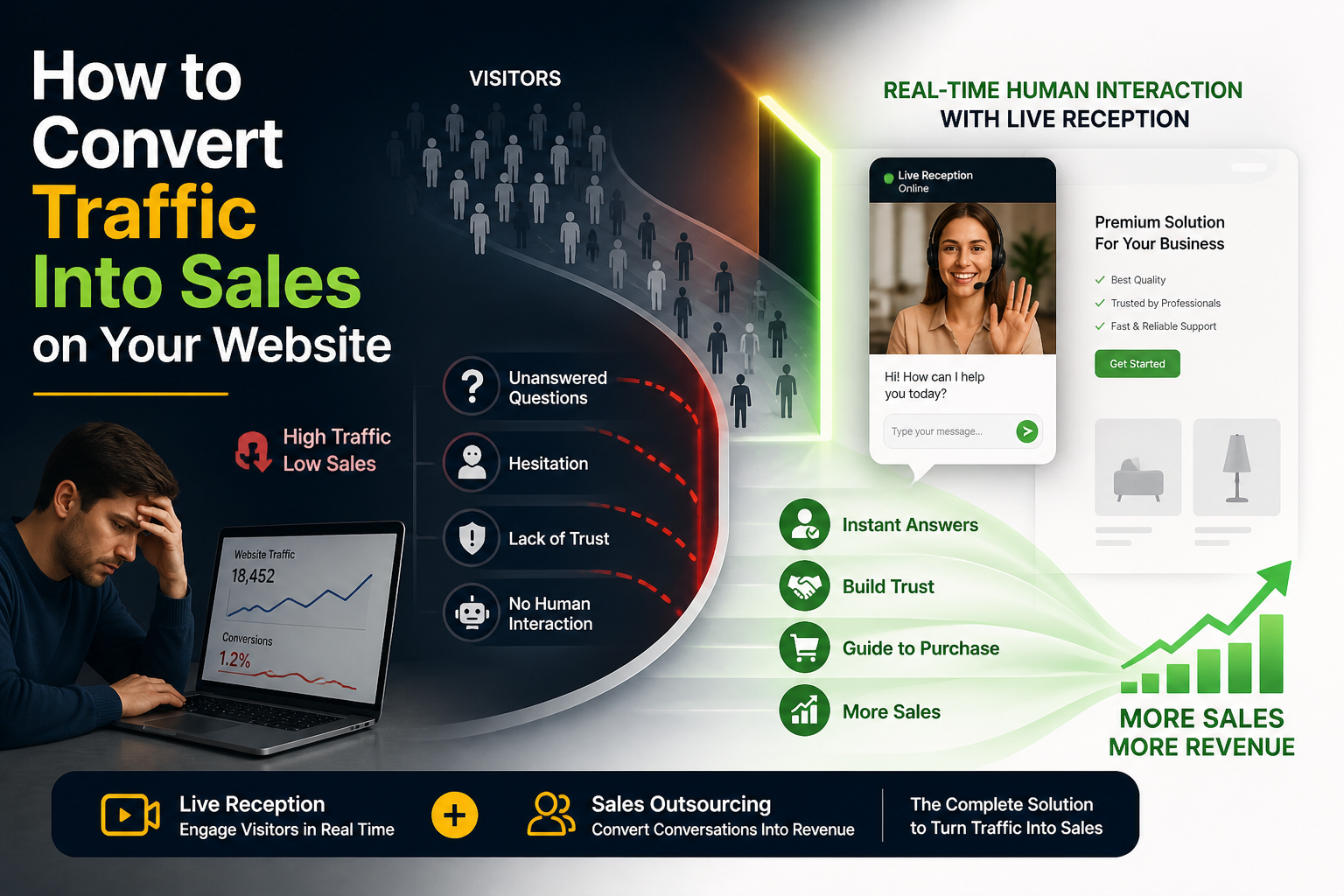
Most companies assume weak conversion rates mean they need more traffic, a bigger ad budget, or a sharper offer.
Often, the real issue is much simpler.
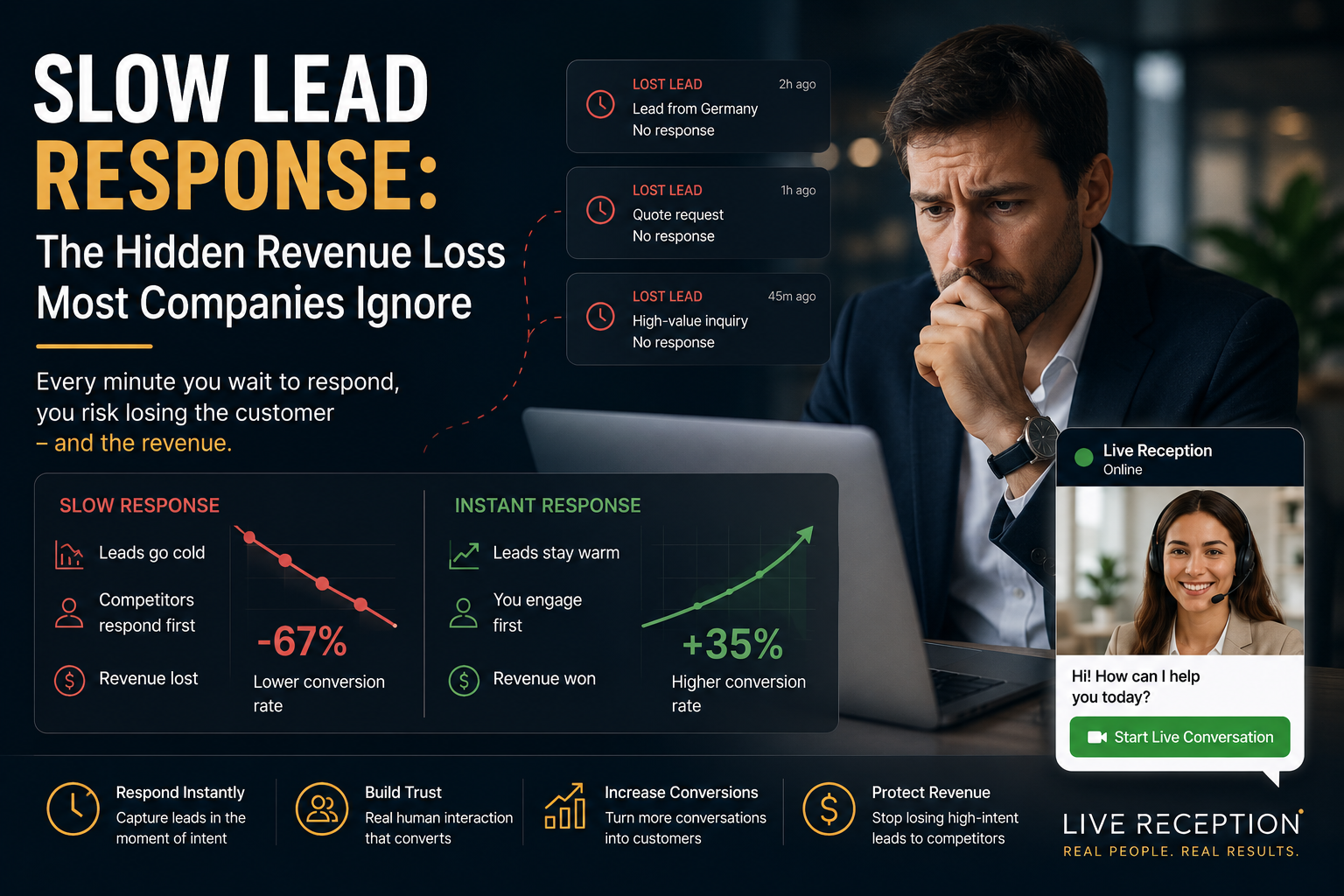
They are responding too slowly.
That delay is expensive because modern buyers rarely wait. When someone fills out a contact form, requests pricing, books a demo, or lands on a service page, they are often comparing several providers at once. Their intent is active in that moment, not later in the afternoon and not tomorrow morning.
If your team takes hours to reply, the lead may still exist in a CRM, but the buying window has already started to close.
Table of Contents
Modern buyer behavior makes speed a sales advantage
Buyers have changed faster than many sales processes. They are used to instant answers, fast confirmations, and immediate access to information. That expectation does not stop when they move from buying consumer products to choosing a service provider or requesting a quote.
A website lead is not a passive inquiry. It is usually a live decision in progress.
Someone searching for a hotel room, a logistics provider, a home service company, or a B2B partner is rarely focused on one option alone. They are checking availability, comparing prices, reviewing trust signals, and looking for a company that feels responsive. The first business to respond with clarity and confidence often shapes the decision.
This is why the timing of your response matters so much. The moment a lead appears is usually the moment buying intent is highest.
When that moment is missed, several things happen quickly:
- Interest drops: the emotional momentum behind the inquiry starts to fade
- Competitors gain ground: another company steps in while your team is still catching up
- Urgency softens: what felt like an immediate need becomes something to revisit later
- Trust weakens: silence can feel like disorganization or indifference
- The lead cools off: follow-up becomes harder, even if the lead looked strong at first
None of this shows up clearly in a standard lead report. The form was submitted. The phone number was captured. The campaign delivered a conversion. On paper, the lead existed. In reality, the opportunity may have disappeared before anyone spoke to the buyer.
What slow lead response looks like in real buying situations
Slow response is not always dramatic. It often shows up in ordinary moments that teams underestimate.
A traveler submits an inquiry to a hotel website asking about room availability for an upcoming weekend event. Three hours later, a generic reply lands in the inbox. By then, the traveler has already booked somewhere else with a business that answered in minutes.
An ecommerce shopper hesitates before placing a larger order because a shipping or compatibility detail is unclear. There is no immediate support, only a form submission. The shopper leaves the page, checks a competitor, and completes the purchase there.
A B2B prospect fills out a form after clicking a paid ad for a high-value service. The company sends an automated thank-you email and promises contact soon. No one reaches out right away. The prospect keeps researching, talks to another vendor, and shifts attention there.
A high-ticket buyer visits a service page, lingers on pricing, and wants reassurance before moving forward. There is no real-time human interaction. No one answers the question behind the hesitation. The buyer leaves with uncertainty instead of confidence.
These are not edge cases. They happen daily across industries.
| Buying moment | Immediate response outcome | Slow response outcome |
|---|---|---|
| Quote request | Buyer feels seen and stays engaged | Buyer contacts another provider |
| Product clarification | Objection is handled before abandonment | Cart or session is abandoned |
| Demo or consultation form | Momentum carries into a scheduled call | Lead cools before sales can connect |
| Service page visit with hesitation | Trust increases through live reassurance | Uncertainty grows and conversion drops |
The pattern is consistent: speed protects intent.
Why slow lead response creates hidden revenue loss
The damage from slow response is easy to miss because it hides inside normal reporting. Teams may see stable traffic, a healthy number of form fills, and acceptable cost per lead. Yet revenue still underperforms. Sales feels inefficient. Marketing feels overpriced. Forecasts become harder to trust.
That hidden loss usually comes from the gap between lead generation and lead engagement.
When response time drifts, the business pays twice. First, it pays to generate the lead. Then it pays again through missed conversion, lower sales productivity, and weaker return on every channel that created demand in the first place.
The business impact usually shows up in a few specific ways:
- Lower conversion rates
- Wasted ad spend
- Poor sales efficiency
- Lower customer trust
- Lost high-intent opportunities
Each of those problems compounds the others. If ad campaigns are producing clicks and inquiries but the company responds too late, marketing gets blamed for low ROI when the real friction sits in lead handling. If sales teams spend time chasing people whose interest has already faded, pipeline quality looks worse than it really is. If buyers feel ignored during the decision phase, brand perception slips before a conversation even starts.
This is why slow response is a revenue problem, not just a service issue.
Why automated systems often fail at the point of intent
Automation has value. It can route inquiries, confirm receipt, and support follow-up at scale. Yet many businesses rely on automation to solve a timing problem that really calls for human interaction.
An automated email saying “Thanks, someone will be in touch” is not the same as engagement. It confirms the lead entered the system. It does not address hesitation, urgency, or the buyer’s immediate questions.
Chatbots can help with basic routing, but they often struggle when the buyer’s concern is nuanced. A prospect weighing a premium service, a custom quote, or a significant purchase usually needs reassurance, context, and judgment. Scripted flows rarely create that confidence.
Forms create a similar issue. They are efficient for collecting data, but they also create distance. If a buyer submits a form and hears nothing meaningful right away, the experience feels one-sided. People do not want to wait when they are ready to buy.
Automation usually falls short in these moments because of a few predictable limits:
- Email sequences: fast to send, weak at building immediate confidence
- Chatbots: useful for simple questions, limited when hesitation is emotional or specific
- Static forms: good at capture, poor at reducing friction during the decision
- Delayed callbacks: too late when the buyer is comparing options in real time
Businesses do not lose those leads because interest never existed. They lose them because the response did not match the moment.
How Live Reception captures leads while intent is still high
The strongest fix is not always more traffic, more landing pages, or more campaigns. Often, it is better contact at the right time.
That is where Live Reception changes the economics of lead generation.
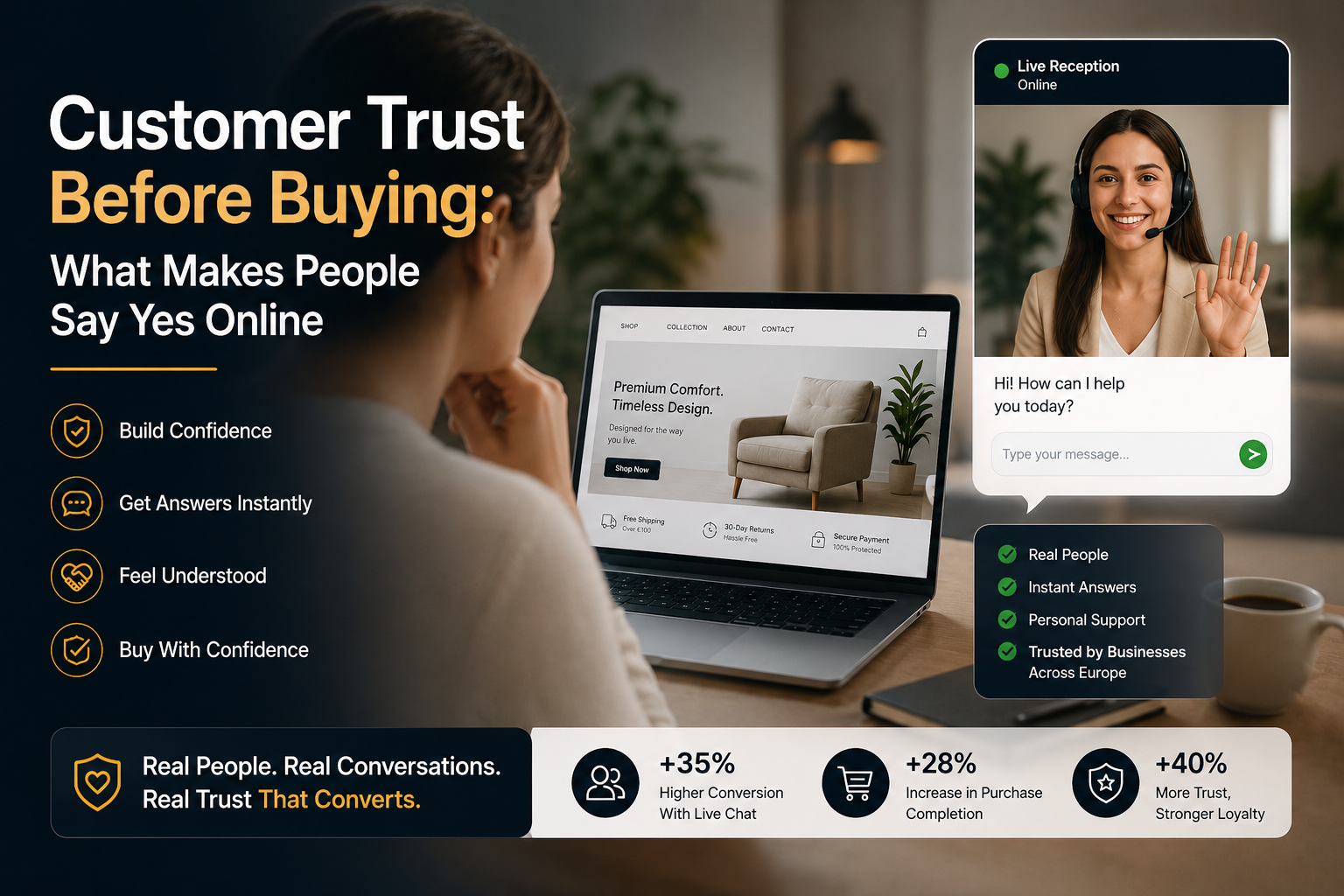
Instead of forcing buyers into a waiting pattern, Live Reception gives them immediate human interaction when they reach out. That matters because early contact does more than answer questions. It reduces uncertainty, creates trust, and keeps momentum alive while the buyer is still making a decision.
A real person can recognize intent in a way automated systems cannot. They can hear urgency in a voice, detect hesitation in a question, and respond with confidence instead of a template. That kind of interaction gives the buyer what they are actually looking for: reassurance that they are dealing with a business that is attentive, organized, and ready to help.
The commercial value is straightforward:
- Immediate engagement: leads are acknowledged while attention is still focused
- Decision-phase support: questions are answered before hesitation turns into delay
- Human connection: trust grows faster when a buyer feels heard
- Higher conversion without more traffic: more of the leads you already paid for move forward
This is especially powerful for companies that depend on website inquiries, paid ads, landing pages, or outbound interest. When lead volume is steady but conversions feel inconsistent, fast human response can unlock revenue that was already within reach.
Why fast lead response strengthens sales outsourcing performance
Fast response also has a direct link to sales execution.
The value of Sales Outsourcing Services is often framed around scalability, consistency, and access to trained sales talent. Those are real benefits. Still, one of the biggest advantages in modern sales environments is speed.
When outsourced sales teams are supported by a system that engages leads early, they can work warmer opportunities instead of chasing stale ones. That changes the quality of the pipeline and the productivity of every rep involved.
A faster first touch improves more than booking rates. It improves the entire sales rhythm. The lead enters conversations with stronger recall, higher trust, and clearer intent. The sales team spends less time reviving dead interest and more time moving active buyers through the process.
This creates a better operating model:
- Marketing generates demand.
- Live response captures and qualifies interest immediately.
- Sales follows up with momentum already intact.
That sequence is far more efficient than sending paid traffic to a form, waiting hours, and asking sales to recover urgency that has already faded.
For businesses selling high-value services, complex solutions, or considered purchases, this matters even more. The stakes are higher, the objections are more nuanced, and buyer confidence is a bigger factor in conversion.
Where revenue growth starts before you buy more traffic
Many companies are one process improvement away from better conversion rates, yet they keep looking for growth in the wrong place.
They increase media spend before fixing speed to lead. They redesign landing pages before fixing follow-up. They ask marketing for more volume when the real issue is response time.
A healthier question is this: how many current leads are being lost in the first few minutes after they appear?
That question changes strategy. It shifts attention from lead quantity to lead capture quality. It reveals whether low conversion is actually a traffic issue or a timing issue.
For teams that want a practical way forward, a simple audit can uncover a lot:
- Measure average first-response time across website forms, ad leads, and inbound inquiries
- Review what a lead experiences in the first 5 to 15 minutes
- Check how often human interaction happens during that initial window
- Compare lead source performance against response speed, not just cost per lead
The businesses that win more often are not always the ones with the biggest budgets. They are often the ones that respond while intent is still alive.
That is the hidden revenue lesson many companies miss. They focus on generating more leads. Very few focus on responding fast enough to convert the leads they already have.